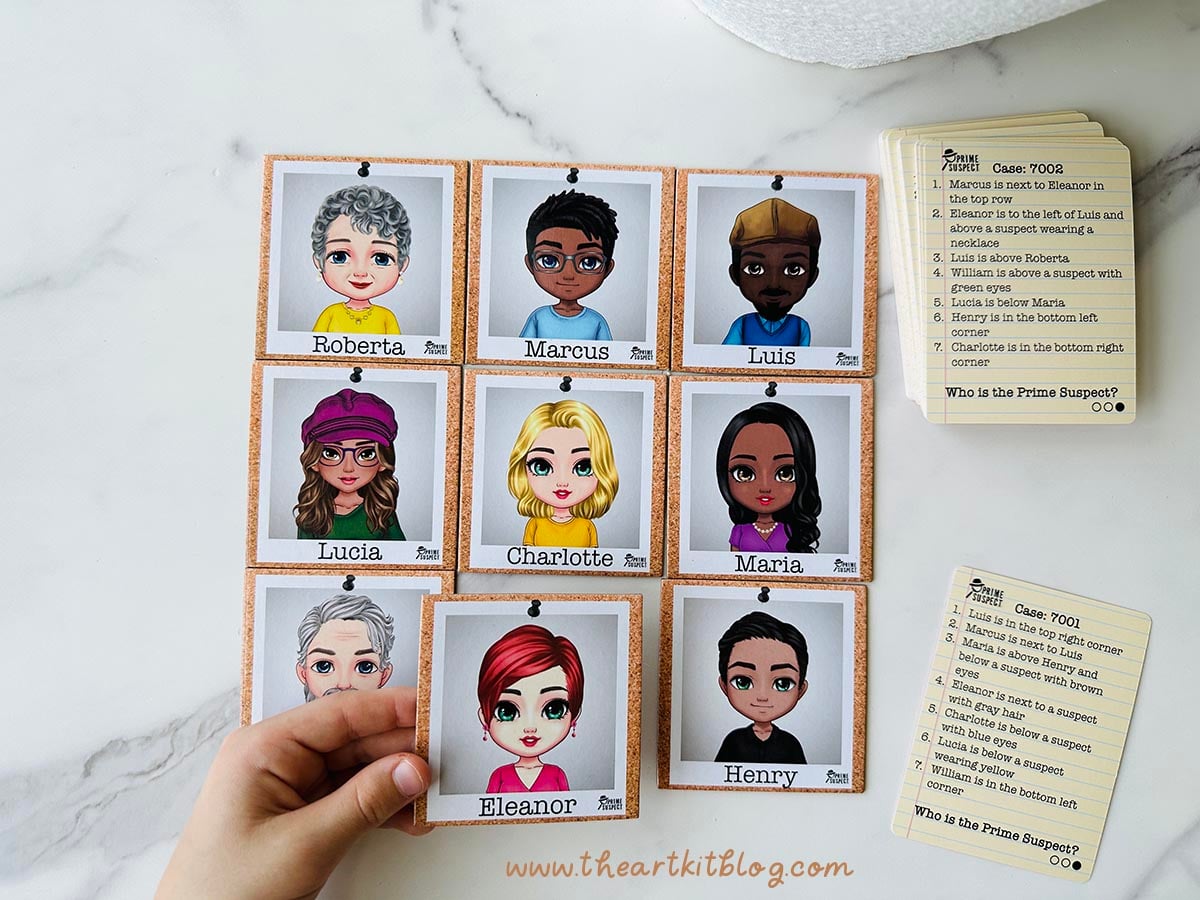
The Code-Breaking Game We Keep Playing
Disclosure: This post contains affiliate links, which means I may earn a commission if you make a purchase through one of my links, at no additional cost to you. As an Amazon Associate, I earn from qualifying purchases. Please see our full disclosure for more information. The Art Kit participates in the Target Affiliate Marketing Program and Walmart’s affiliate program and may earn commissions from qualifying purchases made through our links. Please note: Always use appropriate supervision and use caution with small pieces. Be sure products and activities are appropriate for your child’s age and skill level.
Some logic games are fun once you finally understand the instructions—but first, you have to survive a small novel explaining how to play.
That wasn’t the case with the Code Lock NINECODE Game.
The instructions were surprisingly easy to understand, we could start playing quickly, and the game was genuinely fun. It combines code-breaking, logic, and fast-paced competition without requiring a complicated setup or a 20-minute explanation before the first round.
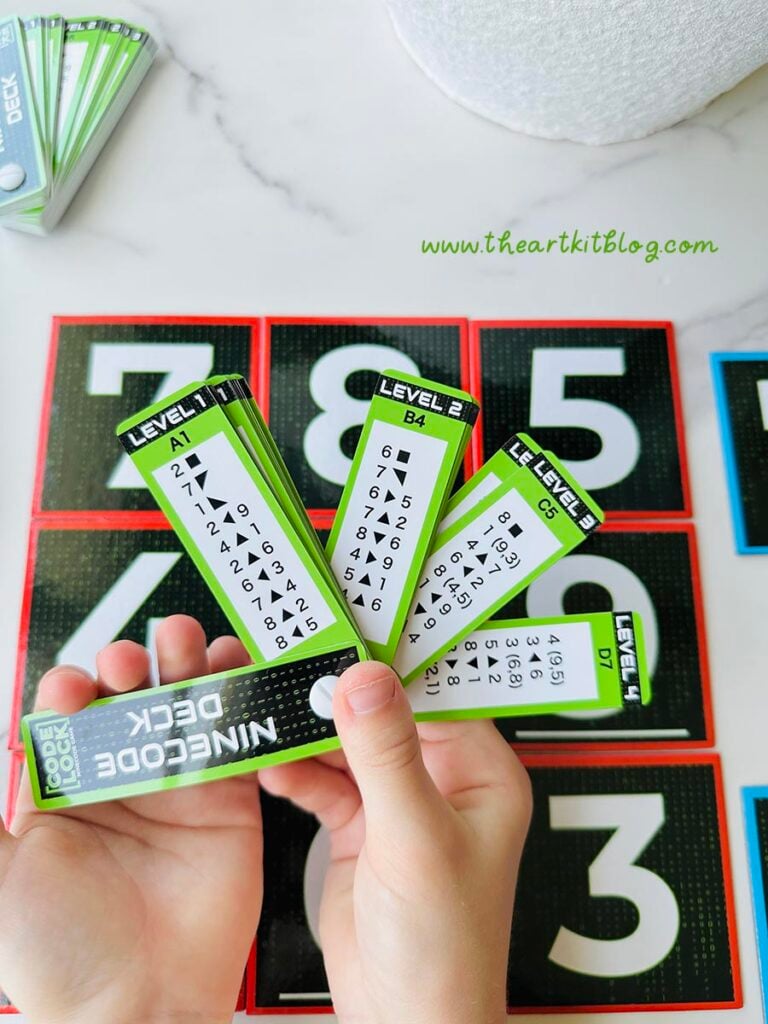
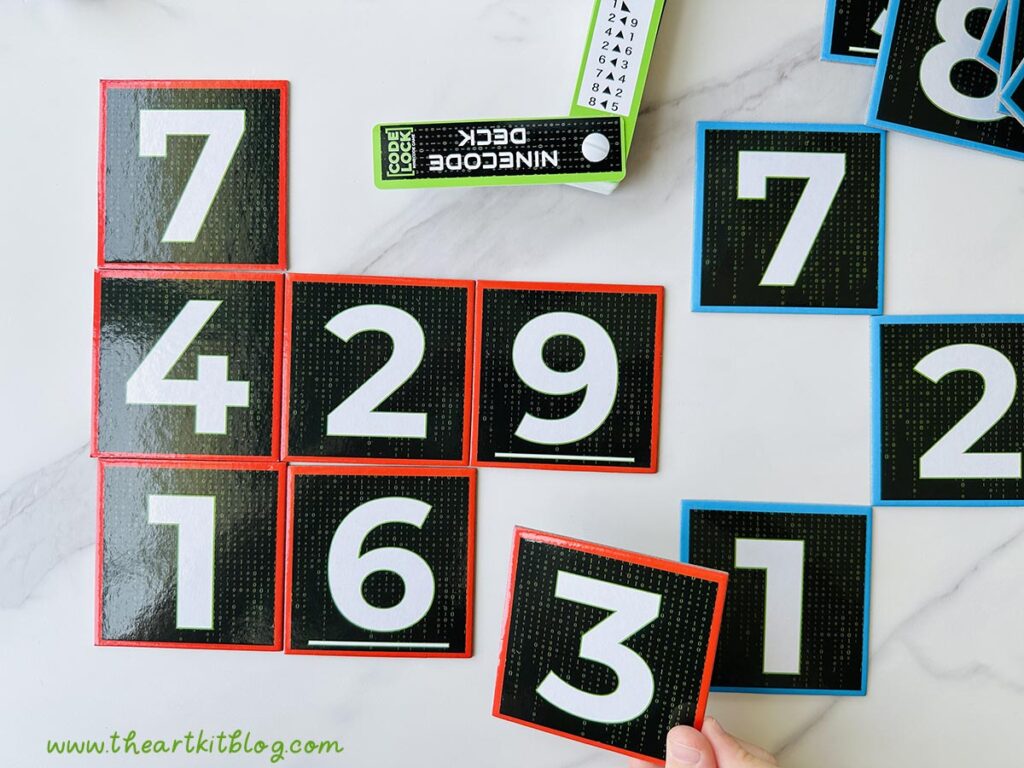
Players study visual clues and race to arrange nine numbered tiles correctly in a 3×3 grid. The first player to crack the code calls out “LOCKED!”
With 40 puzzles, four difficulty levels, and options for one to four players, Code Lock works well for family game nights, homeschool enrichment, classrooms, and screen-free afternoons.
Check the current price of the Code Lock NINECODE Game here.
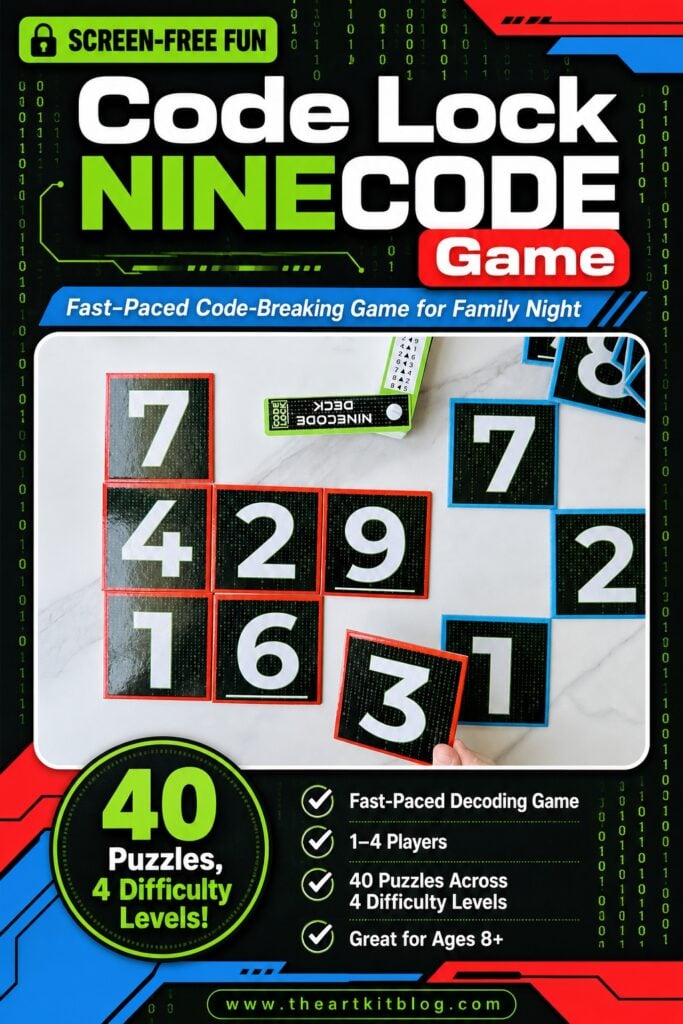
What Is the Code Lock NINECODE Game?
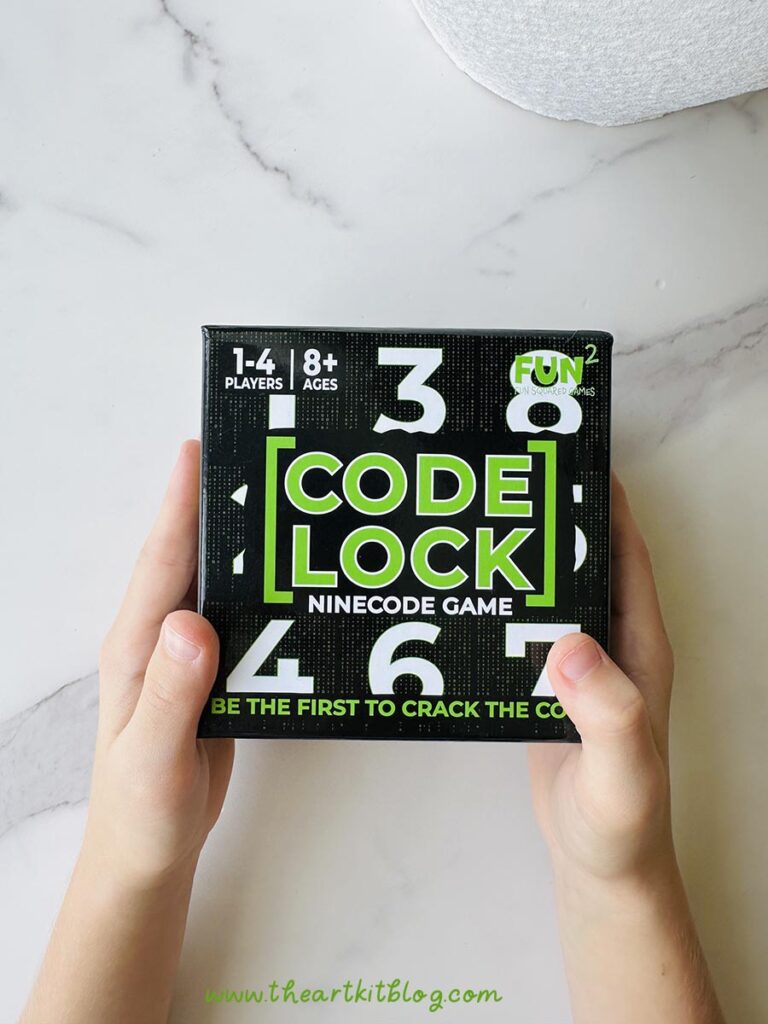
Code Lock is a logic and deduction game from Fun Squared Games. It is designed for one to four players ages 8 and older.
The goal is to use the visual clues on a NINECODE puzzle to arrange nine numbered tiles into the correct 3×3 grid.
Every clue provides information about where the numbers belong. Players must study the symbols, eliminate incorrect possibilities, and keep moving their tiles until all nine numbers are in the right places.
If you are playing competitively, everyone races to solve the same puzzle. The first person who believes the code is correct shouts, “LOCKED!”
It’s a simple idea, but the race adds just enough pressure to make every round exciting.
Code Lock NINECODE Is Surprisingly Easy to Learn
One of my favorite things about Code Lock was how easy the instructions were to understand.
I love family games, but I don’t love spending half of game night reading instructions aloud while everyone slowly wanders away in search of snacks.
With Code Lock, we were able to understand what to do and begin playing without a long, confusing learning period. The basic gameplay is just three steps:
- Select a NINECODE puzzle.
- Use the clues to arrange your nine numbered tiles.
- Call out “LOCKED!” when you believe your code is correct.
After someone locks a code, you check the solution to see whether all nine tiles are in the correct positions.
The rules are easy, but the puzzles still require plenty of thinking. That balance is one of the reasons we had so much fun playing it. Miss 10 said this game is her favorite game!
What Comes With the Code Lock Game?
The Code Lock NINECODE Game includes:
- 40 code-breaking puzzles
- Four difficulty levels
- Nine numbered tiles for each player
- Visual clues
- Solutions for checking each completed code
- Gameplay for one to four players
The different difficulty levels are especially helpful. New players can begin with the easier puzzles while learning how to interpret the symbols and then move on to more challenging codes.
That makes Code Lock accessible for beginners without making it too easy for experienced puzzle solvers.
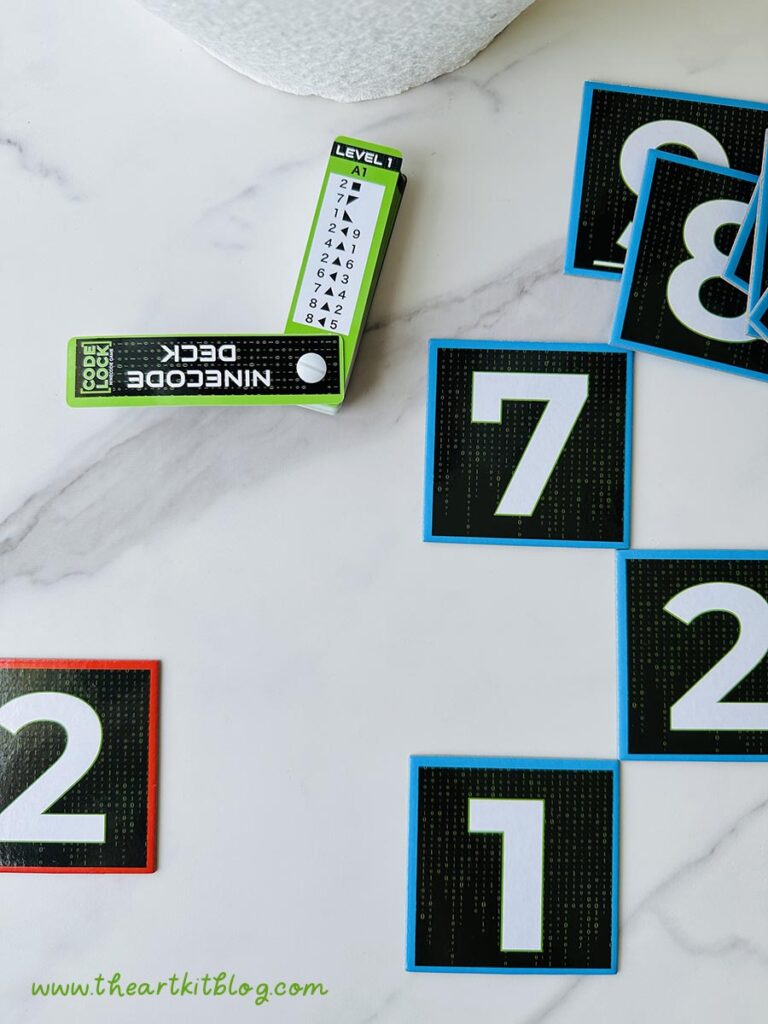
What We Thought of Code Lock NINECODE
We had fun playing Code Lock, and the racing element made it more exciting than simply working through a traditional logic puzzle.
Each player is trying to process the same clues and arrange the same nine numbers, but everyone may solve the puzzle in a slightly different order. You might feel completely confident that you are about to win—and then another player suddenly yells “LOCKED!”
The quick instructions were another big win for me. We didn’t have to work through several practice rounds before the game became enjoyable. It was easy to get started, but the puzzles still gave us something substantial to solve.
I also liked that the game could be played in more than one way. You can race against other players when you want something energetic or work through the puzzles alone when you want a quieter brain teaser.
What Skills Does Code Lock Practice?
Although Code Lock feels like a game, children are also practicing several valuable thinking skills.
The puzzles encourage:
- Logical reasoning
- Deductive thinking
- Visual-spatial skills
- Problem-solving
- Pattern recognition
- Attention to detail
- Working memory
- Flexible thinking
- Persistence
Players have to study each clue, determine what it means, and use that information to decide where the numbered tiles belong.
Sometimes a clue gives you an immediate answer. Other times, you must combine information from several clues before the correct placement becomes clear.
It’s the kind of activity that exercises the brain without feeling like someone slipped an extra worksheet into the day.
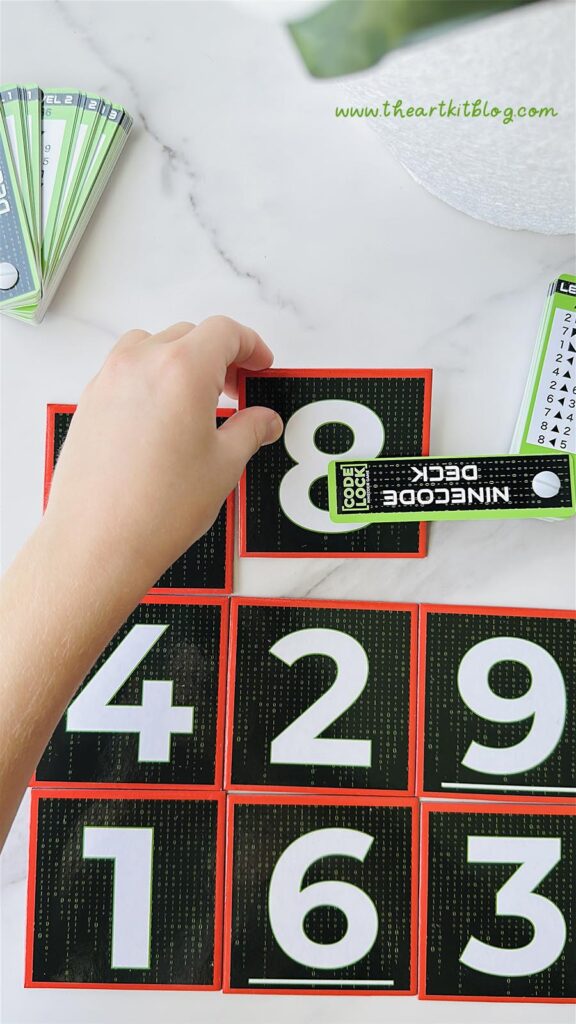
Four Difficulty Levels Keep the Game Interesting
Code Lock includes 40 puzzles divided among four difficulty levels.
Beginning with the easier challenges gives players time to learn how the clues work. Once those puzzles start feeling comfortable, they can move to the next level.
This gradual progression is helpful for children who might become frustrated if the first puzzle were immediately difficult. It also gives players a sense of accomplishment as they improve and advance to harder codes.
The more challenging levels help keep the game interesting for older children, teens, and adults. This definitely isn’t a game that only the children can enjoy while the grown-ups politely pretend to be entertained.
Can One Person Play Code Lock?
Yes! Code Lock works for one to four players.
When playing alone, you select a puzzle, arrange the tiles, and check your finished code against the solution.
Solo play removes the pressure of racing and allows children to take as much time as they need. This would work well for quiet time, a homeschool morning basket, or an independent brain break.
Players could also work cooperatively. Two children could share a set of tiles, discuss the clues, and solve the code together.
That gives families three different ways to play:
- Race against one another
- Solve the puzzles independently
- Work together cooperatively
Code Lock for Homeschool Families
Code Lock would be an easy addition to a homeschool day because it does not require extensive setup or preparation.
You could use it as:
- A morning-basket activity
- A logic warm-up
- A break between lessons
- A hands-on math enrichment activity
- A Friday game-schooling activity
- An independent quiet-time challenge
- A sibling competition
- An activity for an older child who finishes lessons early
Because the instructions are easy to understand, older children may be able to pull it out and begin playing without requiring a parent to reteach the game every time.
It provides meaningful thinking practice while still giving everyone a break from books, screens, and worksheets.
Code Lock for Classrooms
Teachers could use Code Lock in a classroom enrichment center, puzzle station, indoor-recess collection, or early-finisher bin.
Since the game accommodates up to four players, it is well suited to individuals and small groups.
Students could:
- Solve puzzles independently
- Race against classmates
- Work cooperatively in pairs
- Take turns checking the solutions
- Progress through the four difficulty levels
It may be especially appealing to students who enjoy Sudoku, escape-room challenges, math puzzles, secret codes, or other deduction games.
Who Would Enjoy Code Lock?
The Code Lock NINECODE Game would be a particularly good fit for:
- Children who enjoy brain teasers
- Families looking for quick game-night activities
- Homeschoolers who use game-based learning
- Teachers searching for logic-center activities
- Kids who enjoy secret codes and escape rooms
- Puzzle-loving tweens and teens
- Adults who like deduction challenges
- Families wanting more screen-free entertainment
Because the racing element adds pressure, children who prefer to work slowly may enjoy the solo or cooperative version more. Fortunately, it is easy to remove the competitive element without changing the puzzles.
Is Code Lock NINECODE Worth Buying?
Based on our experience, I think Code Lock is a fun choice for families who enjoy logic puzzles and quick games.
The instructions are easy to understand, so you can begin playing without a frustrating learning curve. At the same time, the puzzles require genuine reasoning and become progressively more challenging.
I especially like that it offers:
- Easy-to-follow instructions
- Fast-paced gameplay
- Four difficulty levels
- 40 different puzzles
- Solo and multiplayer options
- Screen-free entertainment
- Logic and problem-solving practice
- Play for children and adults
It is simple enough to pull out for a quick round but challenging enough to make players want to try another puzzle.
Get the Code Lock NINECODE Game here.
Code Lock NINECODE Game FAQs
What age is Code Lock NINECODE for?
Code Lock is recommended for ages 8 and older. Puzzle-loving teens and adults can enjoy the more challenging levels too. My 8 year old loved this game, as did my older children.
How many people can play Code Lock?
Code Lock can be played by one to four people. Players can race, solve puzzles alone, or work together cooperatively.
Is Code Lock easy to learn?
Yes. This was one of my favorite things about it. We found the instructions easy to understand and were able to begin playing without a long or confusing learning period.
How many puzzles are included?
The game includes 40 NINECODE puzzles across four difficulty levels.
Is Code Lock an educational game?
Code Lock encourages logical reasoning, deduction, problem-solving, pattern recognition, and visual-spatial thinking. It feels like a game rather than a formal lesson, making it a good option for game-schooling and classroom enrichment.
Can children play without racing?
Yes. Children can solve the puzzles independently or work together without making it a race.
Is Code Lock the same as Mastermind?
No. Both games involve logical deduction, but Code Lock challenges players to use visual clues to arrange nine numbered tiles into a 3×3 grid.
Final Thoughts on the Code Lock NINECODE Game
The Code Lock NINECODE Game manages to be easy to learn without being boring or overly simple.
We had fun racing to solve the codes, and I loved that we could understand the instructions and start playing quickly. The four difficulty levels allow players to begin with manageable challenges and gradually work toward trickier puzzles.
If your family enjoys code-breaking, logic puzzles, friendly competition, or screen-free games, Code Lock is definitely one to consider.
Get the Code Lock NINECODE Game here.
Discover More Fun Games Here:
- Squzzle Puzzle Review: The Screen-Free Brain Teaser You’ll Want to Solve Again and Again
- Prime Suspect: At the Ski Resort Review | A Fun Logic Game for Kids, Teens, and Adults
- Flipingo Review: A Fun Word Recognition and Vocabulary Bingo Game