Flipingo Review: A Fun Word Recognition and Vocabulary Bingo Game
Disclosure: This post contains affiliate links, which means I may earn a commission if you make a purchase through one of my links, at no additional cost to you. As an Amazon Associate, I earn from qualifying purchases. Please see our full disclosure for more information. The Art Kit participates in the Target Affiliate Marketing Program and Walmart’s affiliate program and may earn commissions from qualifying purchases made through our links. Please note: Always use appropriate supervision and use caution with small pieces. Be sure products and activities are appropriate for your child’s age and skill level.
We play a lot of games around here, so it takes something especially fun to earn the title of “favorite.”
But after playing Flipingo Word Recognition and Vocabulary Bingo, Miss 8 officially declared it her new favorite game—and honestly, I can see why!
Flipingo combines the familiar fun of bingo with colorful picture cards and tiles that players actually flip over as they play. It’s quick to learn, doesn’t take forever to set up, and gives younger children a playful way to practice word recognition and vocabulary without making it feel like a reading lesson.
In other words, it sneaks a little learning into family game time. Those are my favorite kinds of educational games!
What Is the Flipingo Game?
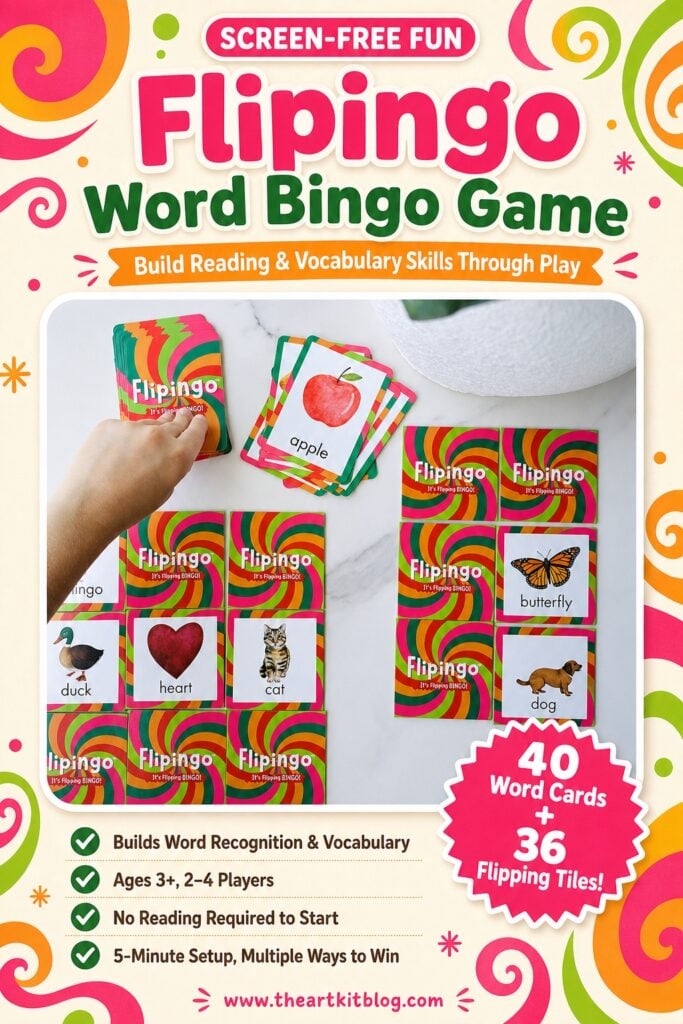
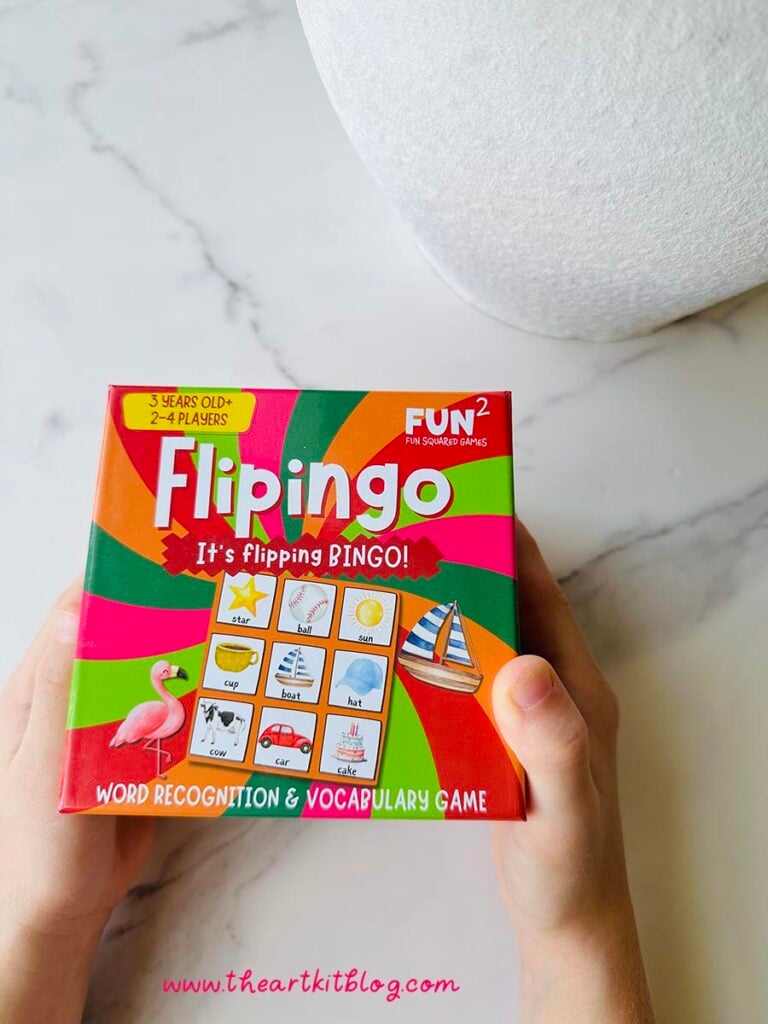
Flipingo is a fast-paced word recognition and picture-matching game designed for children ages three and older.
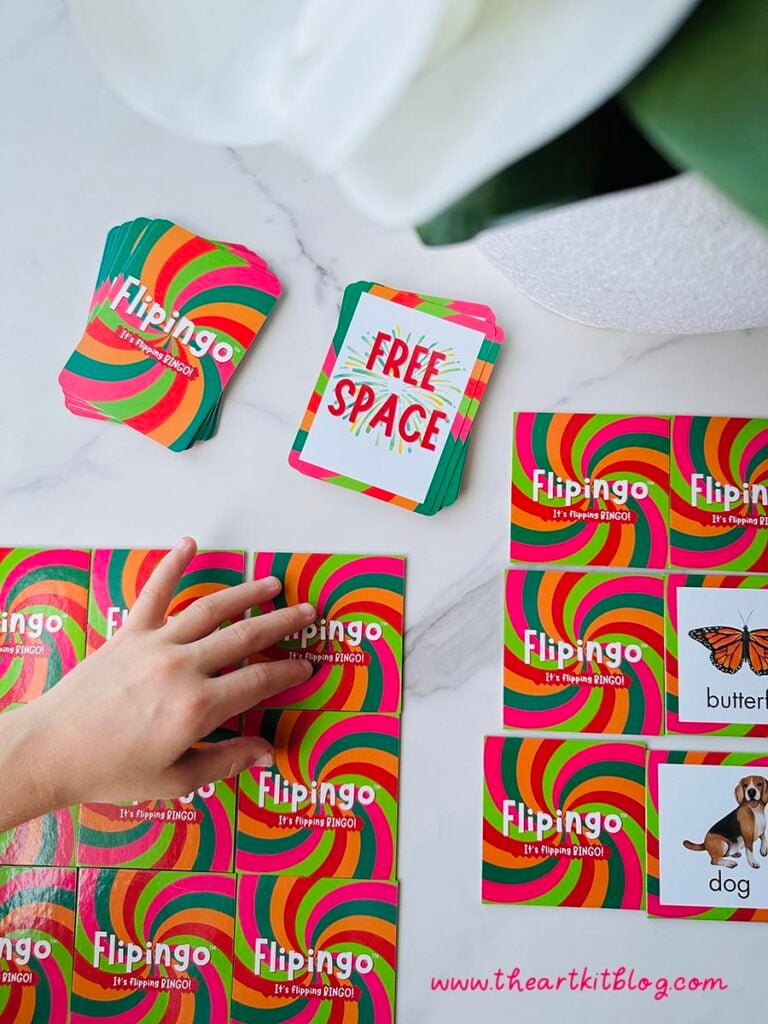
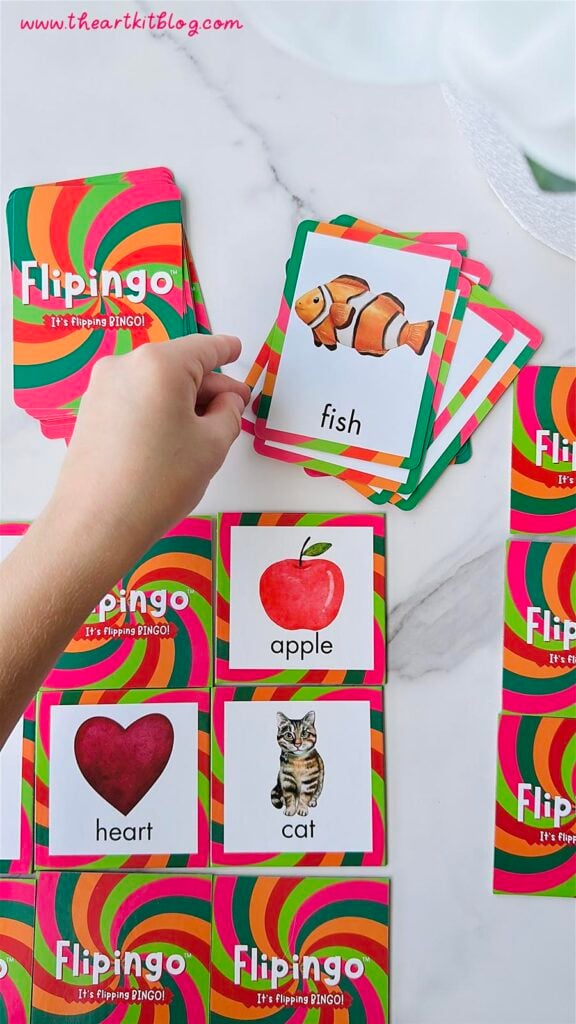
It has some of the familiar elements of bingo, but instead of marking a traditional bingo card, each player creates a board using nine double-sided picture tiles. As matching word cards are called, players flip over the corresponding tiles on their boards.
The flipping action makes the game feel more interactive than ordinary bingo. Children aren’t simply waiting for someone to call a word—they’re studying their pictures, searching for a match, and flipping the correct tile when they find it.
The game includes:
- 40 illustrated word cards
- 36 double-sided flipping tiles
- Enough tiles for two to four players
- Several different ways to win
It is designed for preschoolers and early elementary-aged children, but older siblings and parents can easily join the game, too. Miss 8 certainly didn’t think it was only for preschoolers!
Why Miss 8 Loves Flipingo
Miss 8’s review was wonderfully uncomplicated: Flipingo is her favorite game.
She also decided that it would be fun to choose her favorite images for the tiles, so we did that too. We had fun playing!
I think a big part of the appeal is that something is always happening. Players get to arrange their own tiles, look for matching pictures, and physically flip the tiles as the words are called.
There also isn’t a long list of complicated instructions to remember. We could get started quickly, and once we began playing, the game moved along at a nice pace.
That makes Flipingo a great choice when your children want to play a game but you don’t have the time—or the mental energy—to spend 20 minutes deciphering instructions first. We have all encountered those games where learning how to play feels like completing a small college course. Thankfully, this is not one of them!
How to Play Flipingo
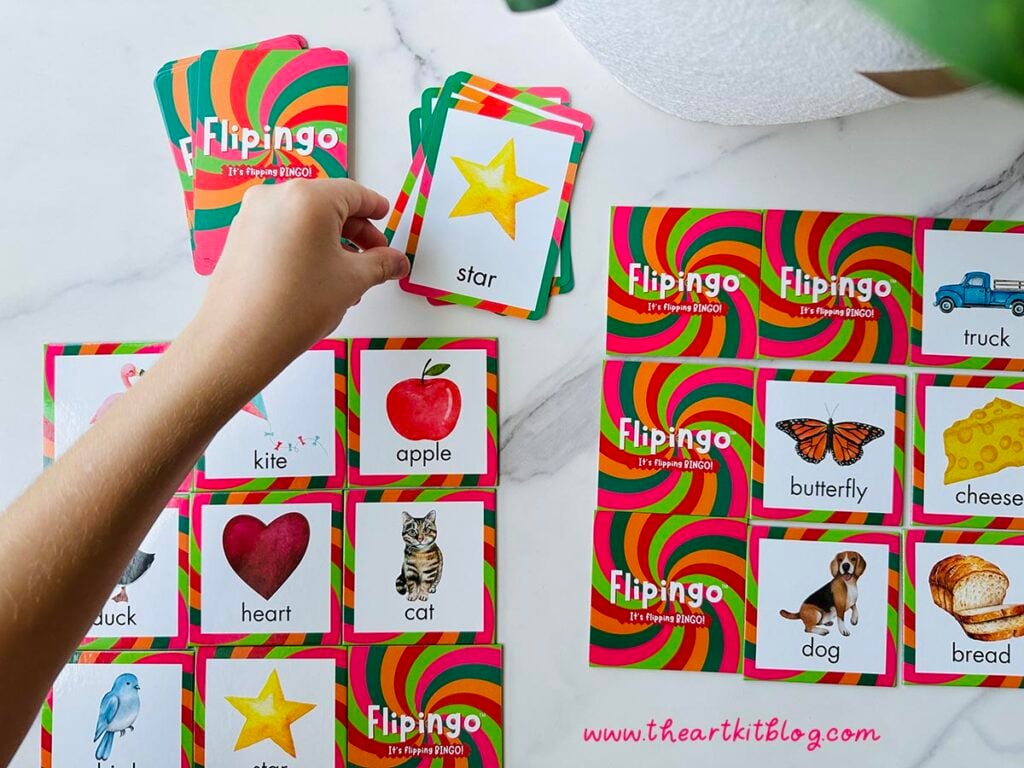
Each player receives nine double-sided tiles and arranges them in a three-by-three grid.
One person draws and calls the illustrated word cards. Players examine their boards to see whether they have the matching word and picture. When they find a match, they flip that tile over.
Depending on the version you choose to play, the first player to complete the required pattern wins.
Possible winning patterns include:
- Three tiles in a row
- A diagonal line
- All four corners
- A full board
Having several ways to win makes it easy to adjust the length of the game. A three-in-a-row round can be fairly quick, while playing for a full board gives children a longer game.
You can also play several short rounds and change the winning pattern each time. This adds variety without requiring children to learn an entirely new set of rules.
A Reading Game Children Will Actually Want to Play
Flipingo is described as a word recognition and vocabulary game, but children do not need to be independent readers before they can begin playing.
Each word card includes a corresponding picture, allowing preschoolers and beginning readers to participate by using visual clues. As children repeatedly hear the words and match them with the pictures, they can begin making connections between spoken words, printed words, and their meanings.
Depending on a child’s age and reading level, Flipingo may help provide practice with:
- Word recognition
- Picture and word association
- Early vocabulary
- Visual discrimination
- Listening skills
- Matching
- Concentration
- Taking turns
- Following directions
Of course, it is still a game—not a complete reading curriculum. But it is a fun way to reinforce early literacy skills through play.
Children tend to be much more enthusiastic about practicing words when they are trying to flip a tile before their sibling wins!
Why I Like Flipingo for Preschool and Kindergarten
There are several things that make Flipingo a good educational game for preschool and kindergarten-aged children.
Children Can Play Before They Can Read
Because the game uses both words and illustrations, children can recognize and match the pictures even if they cannot yet read all of the printed words.
This allows younger children to play alongside older siblings without constantly needing an adult to tell them what to do.
It Makes Word Practice Feel Like Play
Flash cards and worksheets can be useful, but not every child wants to sit down for another formal reading activity.
Flipingo gives children exposure to words and vocabulary while their attention is focused on playing and winning the game.
The Rules Are Easy to Understand
The basic idea—find the matching picture and flip the tile—is simple enough for younger players to grasp.
You may need to help a preschooler during the first round, but this is not a game that requires a lengthy explanation every time you pull it from the shelf.
The Game Is Quick to Set Up
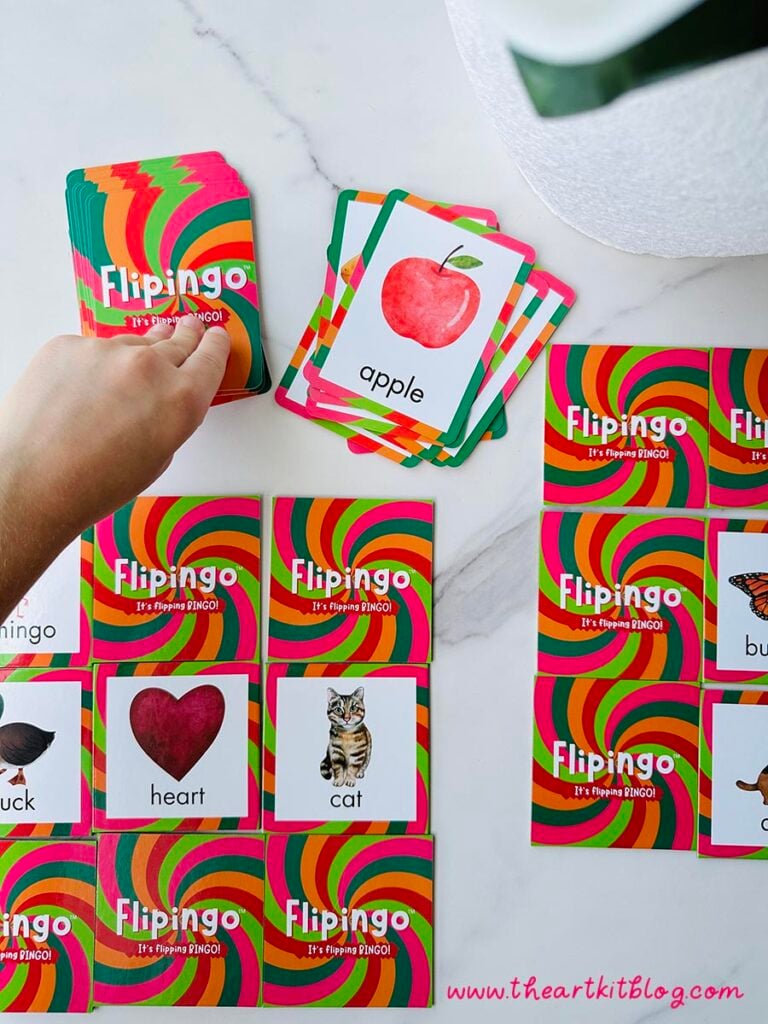
Each player simply arranges nine tiles in a three-by-three grid. You can have the game ready to play in just seconds.
That makes it a practical option for busy homeschool days, classroom centers, family game nights, or those 15-minute stretches when children desperately need something constructive to do.
There Are Different Ways to Win
Playing for three in a row is helpful when you want a short game. Playing for four corners, a diagonal, or a full board lets you make the game last longer.
This also keeps repeated rounds from feeling exactly the same.
Ways to Use Flipingo in Your Homeschool
Flipingo fits especially well into a homeschool day because it is educational without feeling overly schoolish.
Here are a few ways you could use it:
Start the School Day With a Game
Use a quick round as a gentle way to transition into lessons. This may work especially well for a child who is reluctant to begin formal reading practice.
Add It to Your Language Arts Lessons
After playing, ask your child to choose several words from the game and use them in sentences. Older children could write the sentences, while younger children dictate them to you.
Use It for Sibling Learning Time
An older child can call the cards while younger siblings play. This gives the older child reading practice and lets the younger players work on listening, matching, and word recognition.
Keep It in Your Morning Basket
Flipingo could be a fun Friday addition to your homeschool morning basket or an easy activity for a lighter school day.
Bring It Out for Family Game Night
Although it supports early learning, Flipingo doesn’t have to stay on the school shelf. It is easy enough for young children but still enjoyable as a quick family game.
Flipingo for Classrooms and Learning Centers
Flipingo could also work well in a preschool, kindergarten classroom, library program, or learning center.
Since two to four children can play at once, it is a manageable size for a small group. Teachers could use it during literacy centers, indoor recess, early-finisher time, or as a special Friday activity.
The picture support allows children with different reading abilities to play together. A teacher or classroom helper can call the cards, or a student who is already reading confidently can take that role.
It could also be useful for:
- Preschool classrooms
- Kindergarten literacy centers
- Homeschool co-ops
- Library game programs
- After-school programs
- Occupational therapy play
- Grandparent-and-grandchild game time
- Rainy-day activities
Who Would Enjoy Flipingo?
I think Flipingo would be a particularly good fit for:
- Preschoolers learning new vocabulary
- Kindergarteners practicing early word recognition
- Beginning readers who enjoy visual games
- Children who find worksheets frustrating
- Families looking for short, easy-to-learn games
- Homeschoolers wanting playful language arts practice
- Teachers looking for small-group literacy activities
- Younger children who want to join family game night
The suggested age is three and older. Very young players may need assistance learning how to arrange their tiles and recognize the matches, but the use of pictures makes the game accessible even before children can read independently.
Is Flipingo Only for Preschoolers?
No. Although Flipingo is designed to support preschool and kindergarten reading skills, Miss 8 still had a fantastic time playing it.
Children don’t always choose games based on the educational age printed on the box. If the actual gameplay is satisfying—and flipping over the tiles definitely is—they may enjoy it even after they have mastered the words.
Older children can also serve as the caller, play with younger siblings, or help beginning readers find their matches.
However, the vocabulary may be too simple for older children who want a challenging reading game. For them, Flipingo will probably work best as a quick family game rather than an academic challenge.
What We Like About Flipingo
Our favorite things about the game include:
- It is easy to learn.
- Setup only takes a few minutes.
- The flipping tiles make it more interactive than regular bingo.
- Children can play even if they are not reading independently.
- It reinforces word recognition and vocabulary through play.
- You can choose from several winning patterns.
- It works for two to four players.
- Rounds can be short enough to fit into a busy day.
- Miss 8 genuinely thinks it is fun!
That last point matters. An educational game can promise to practice every skill under the sun, but it isn’t terribly helpful if your children groan whenever you bring out the box.
Is Flipingo Worth It?
If you are looking for a fun preschool reading game, kindergarten vocabulary activity, or easy family game that younger children can actually play, I think Flipingo is a great one to consider.
The instructions are easy to understand, the game can be set up quickly, and the combination of pictures, printed words, and flipping tiles keeps children involved.
Most importantly, it passed Miss 8’s test. Out of all the games available to her, she called Flipingo her favorite—and that is a much more convincing review than anything I could invent!
Flipingo Game Frequently Asked Questions
What ages is Flipingo for?
Flipingo is recommended for children ages three and older. Preschoolers may use the pictures to find matches, while kindergarteners and beginning readers can practice recognizing the accompanying words.
How many people can play Flipingo?
Flipingo is designed for two to four players.
Does a child need to know how to read to play?
No. The word cards and tiles include pictures, so children can begin playing by matching the illustrations. This makes the game accessible to preschoolers and pre-readers.
How long does Flipingo take to set up?
Setup only takes a minute or two. Each player arranges nine double-sided tiles into a three-by-three grid before the game begins.
What comes with the Flipingo game?
The game includes 40 illustrated word cards and 36 double-sided flipping tiles, providing enough tiles for up to four players.
How do you win Flipingo?
Players flip their tiles as matching words are called. Depending on the rules selected for that round, a player can win by completing three in a row, a diagonal line, four corners, or the entire board.
Is Flipingo good for homeschoolers?
Yes. Flipingo can be used as a playful supplement to preschool or kindergarten language arts. It gives children practice with vocabulary, listening, picture matching, and word recognition.
Can Flipingo be used in a classroom?
Yes. Since it accommodates up to four players, Flipingo could work well for a preschool or kindergarten learning center, a small reading group, or an early-finisher activity.
Final Thoughts
Flipingo takes a familiar game children already understand and gives it a clever, hands-on twist.
It is simple enough for preschoolers, useful for children developing early reading skills, and entertaining enough that Miss 8 immediately wanted to keep playing.
If your child enjoys matching games, bingo, colorful picture cards, or anything they can flip, Flipingo could quickly become a favorite at your house, too.
Discover More Fun Games Here:
- Squzzle Puzzle Review: The Screen-Free Brain Teaser You’ll Want to Solve Again and Again
- Prime Suspect: At the Ski Resort Review | A Fun Logic Game for Kids, Teens, and Adults
- Flipingo Review: A Fun Word Recognition and Vocabulary Bingo Game